Login
Recover password
Registration

Members can log in to create events, publish stories, share resources and modify their password and newsletter subscription.

E-mail *
First name *
Last name *
Language preference *
Newsletter options *

By clicking below to submit this form, I hereby agree to the Sphere’s Privacy Policy and terms of use.

Horn of Africa Crisis – A Call for Program Quality, Accountability and Effectiveness
By the Sphere Project, People In Aid, HAP International and ALNAP

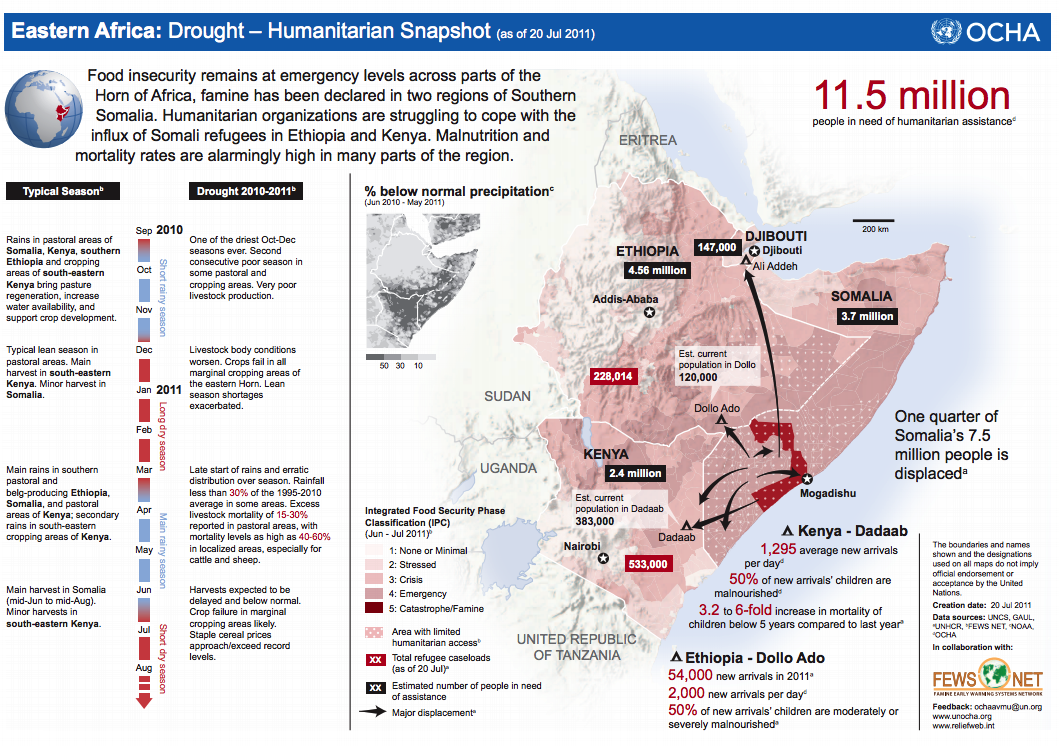
Numerous factors, including drought, rising food prices, conflict, seasonal floods and localized resource conflicts are contributing to a deepening crisis, and overstretching the coping strategies of rural and urban livelihoods systems alike. Two regions in Somalia have been declared famine areas and many thousands of people from Somalia continue to flee across borders, seeking protection from both drought and conflict.

Governments and donors who in many cases have been working to address the longer-term causes of livelihood insecurity, are now also responding to the immediate emergency. The following organisations, Humanitarian Accountability Partnership, The Sphere Project, ALNAP, and People In Aid support the humanitarian system in providing accountable programming that meets accepted standards of quality, both in the immediate humanitarian response, and in the development and implementation of organisational and operational strategies for short and long-term recovery and the prevention of future crises. These initiatives emerged as part of the sector’s response to Rwanda and have, singly and collectively, added value to specific sector-wide responses following flooding in Pakistan, the Asian Tsunami and the Haiti earthquake.

We would like to highlight the following standards and guidance, and encourage those engaged in the response to incorporate them into their work. Specific guidance and materials are available on each initiative’s website; updates on proposed collective activity by Quality & Accountability initiatives will be communicated shortly.

  • Agreed, sector-wide standards for the assurance of programme quality, and in particular the Sphere and Livestock Emergency Guidelines (LEGS) standards.
  • Agreed standards and best practice for accountable programming such as HAP standards. These help to ensure that communities have relevant information on the scope and criteria of emergency response and that the views and concerns of drought affected and displaced populations are listened to and addressed appropriately.
  • Guidance on Communicating with Disaster Affected Communities, available in the (CDAC) network guidelines.
  • Guidance on impact measurement, such as the Emergency Capacity Building (ECB) Project’s “Good Enough Guide to Impact Measurement & Accountability”.
  • The People In Aid Code and other materials addressing the challenges of people management and the HR function in such emergencies: in particular surge capacity, recruitment and induction, performance, support and staff care. With regard to leadership within the response, there are recent reports by People In Aid and ALNAP.
  • Lessons from previous drought responses in the Horn of Africa, including those contained within agencies’ own evaluation reports and those captured by ALNAP in the ‘Lessons Learnt: Drought’ paper.
  • Geneva, 26 July 2011.

    Resources:

  • Dwonload this statement (PDF file)
  • Eastern Africa drought: Humanitarian snapshot, 20 July 2011 (PDF file)
  • OCHA`s Somalia Drought Situation Report No. 4 – 26 July 2011 (PDF file)
  • Food security and nutrition working group – Horn and Eastern Africa, July 2011 (PDF file)